Our visit to Robeson County, North Carolina, was more than a site visit. It was a powerful reminder that the work of organizing is rooted in memory, relationships, and the lived experiences of communities that have been asked to survive again and again.
The visit also helped us better understand the work of two projects fiscally sponsored by the Southern Vision Alliance rooted in Robeson County: Robeson County Cooperative for Sustainable Development (RCCSD) and Red-Tailed Hawk Collective (RTHC). Both projects carry forward a long tradition of community organizing, environmental justice, disaster recovery, and Black and Indigenous leadership in the region.
Over lunch in Lumberton, we heard stories about the history of The Center for Community Action (CAA), formerly known as Clergy and Laity Concerned. The name itself carried meaning. In earlier years, having “clergy” in the name offered a layer of protection for multiracial organizing in a county that was not always ready to embrace it. Over time, as the work grew stronger and more deeply rooted, the organization became the Center for Community Action. This new name better reflected what the community was already doing – building power together.
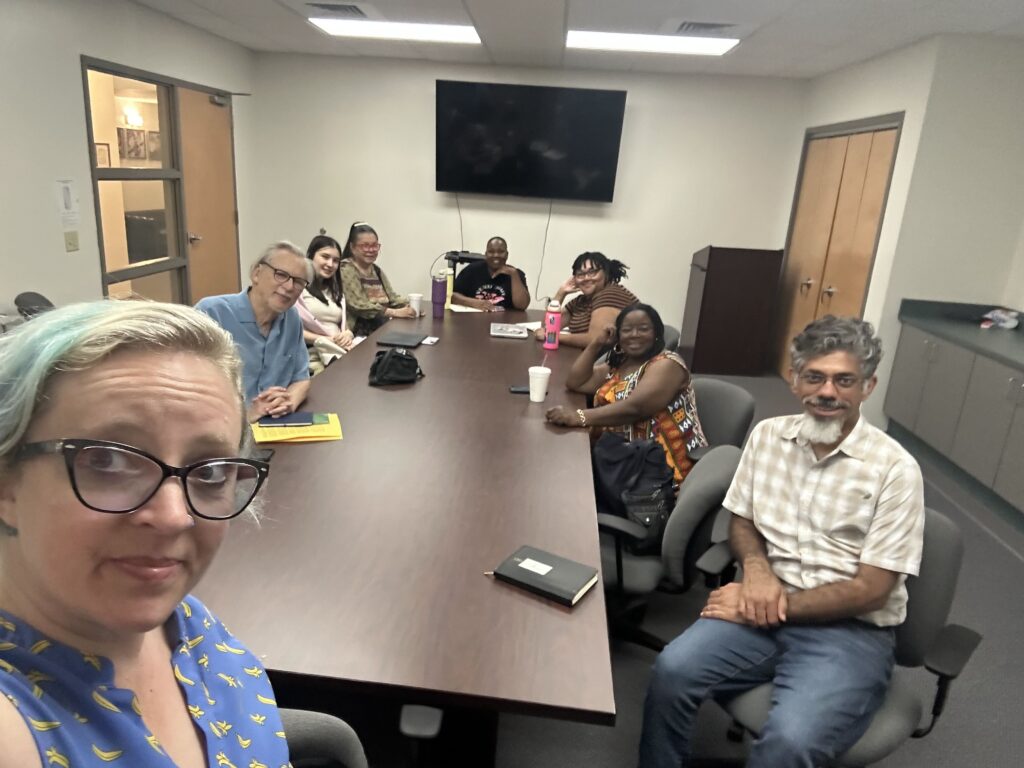
SVA staff learning from Robeson County organizers and community leaders
Credit: E. Everett
We also learned about Robeson County’s long history of Black, Indigenous, and multiracial organizing, from struggles for racial equity in schools and local government to environmental justice campaigns. Leaders shared stories about organizing against harmful projects, building relationships with funders, supporting young leaders, and creating space for Native communities to shape the work that directly impacts them.
Later, we toured parts of West and South Lumberton, where the damage from Hurricanes Matthew and Florence is still visible and present. Empty lots, abandoned houses, elevated homes, and rebuilt streets told a story that statistics alone could never capture. We learned how infrastructure decisions, including the construction of a bridge over I-95 and the local dike system, worsened flooding in historically Black and Indigenous neighborhoods. The dike that was meant to protect the community trapped water inside, leaving homes devastated.
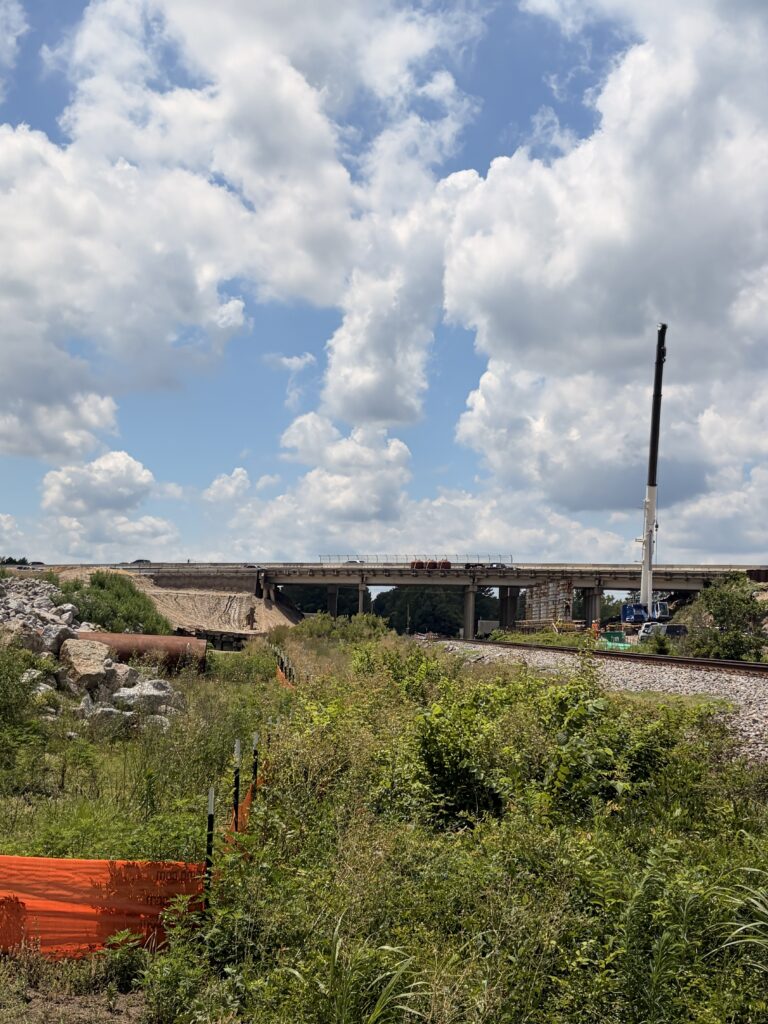
Infrastructure repairs near communities impacted by flooding Photo credit: Manzoor Cheema
One of the most powerful lessons from the tour was how disaster recovery often fails to look at communities as a whole. Recovery systems tend to treat survivors as individual clients, but they rarely ask: Where is the entire community in the recovery process? Who has returned? Who was displaced? Who was left behind?
We also heard about heirs’ property and how unclear paperwork prevented many families from receiving FEMA support or rebuilding their homes. For many families, disaster recovery became not only about flood damage, but also about land, inheritance, and the loss of generational Black wealth.
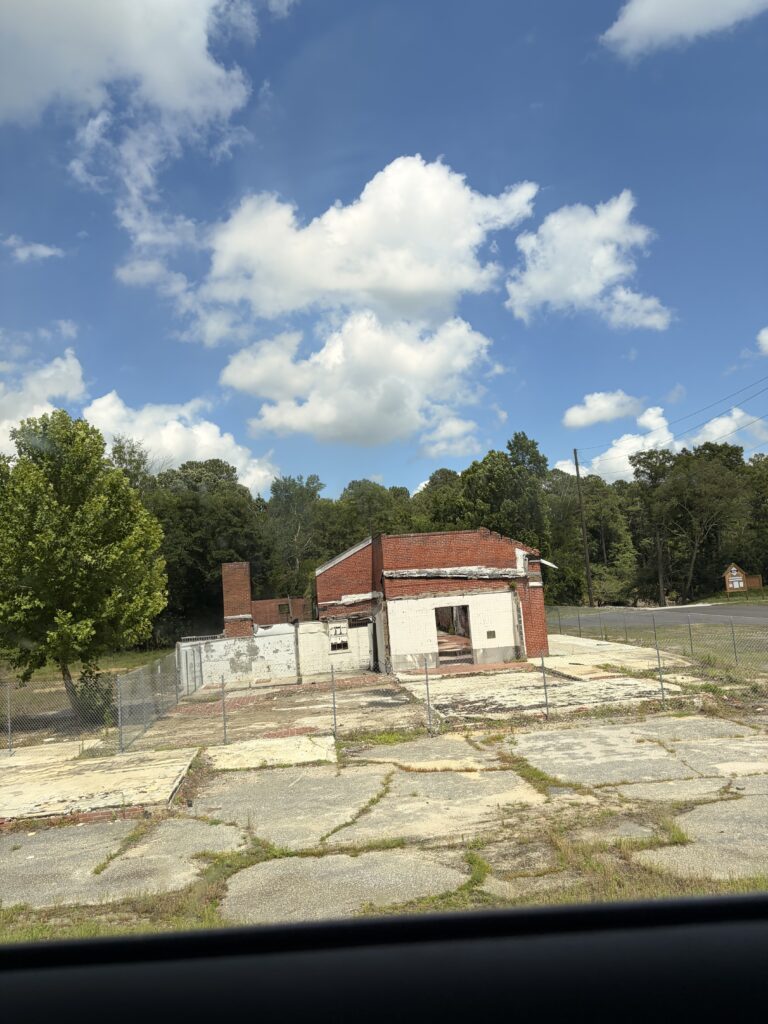
The lasting impact of storms and delayed recovery in Lumberton.
Photo credit: Manzoor Cheema
Still, the visit was not only about loss. It was about resilience, organizing, and the deep knowledge held by local leaders. Robeson County continues to teach us that real recovery is not just rebuilding houses. It is rebuilding power, protecting history, and ensuring that communities most impacted are leading the way forward.
To support this work, you can make a direct contribution to Robeson County Cooperative for Sustainable Development and Red-Tailed Hawk Collective through their Southern Vision Alliance donation pages. Your support helps sustain community-led organizing, environmental justice, disaster recovery, and power-building efforts rooted in Robeson County.