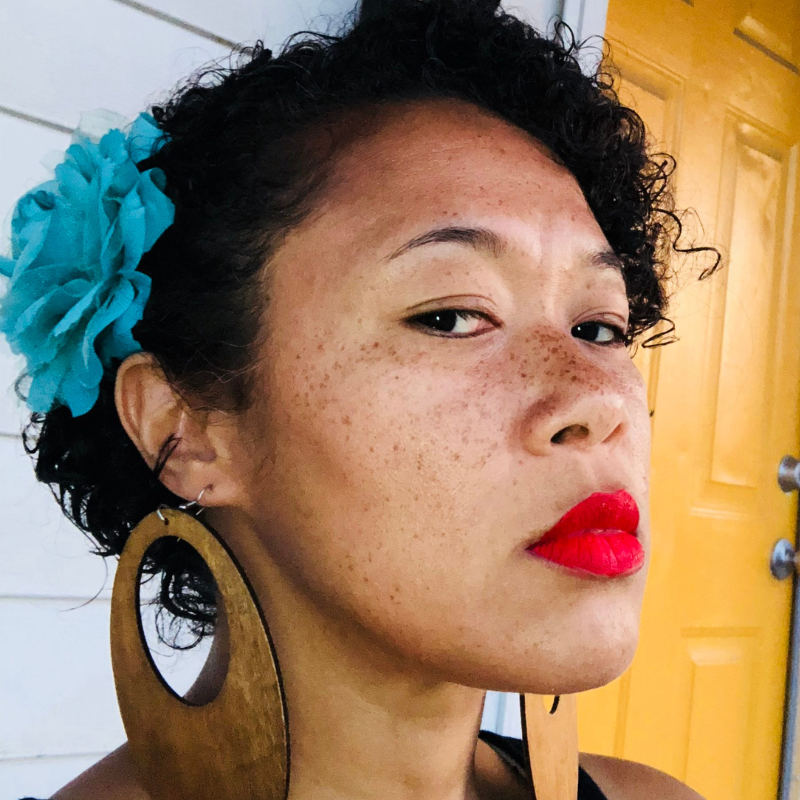
Leilani Dowell
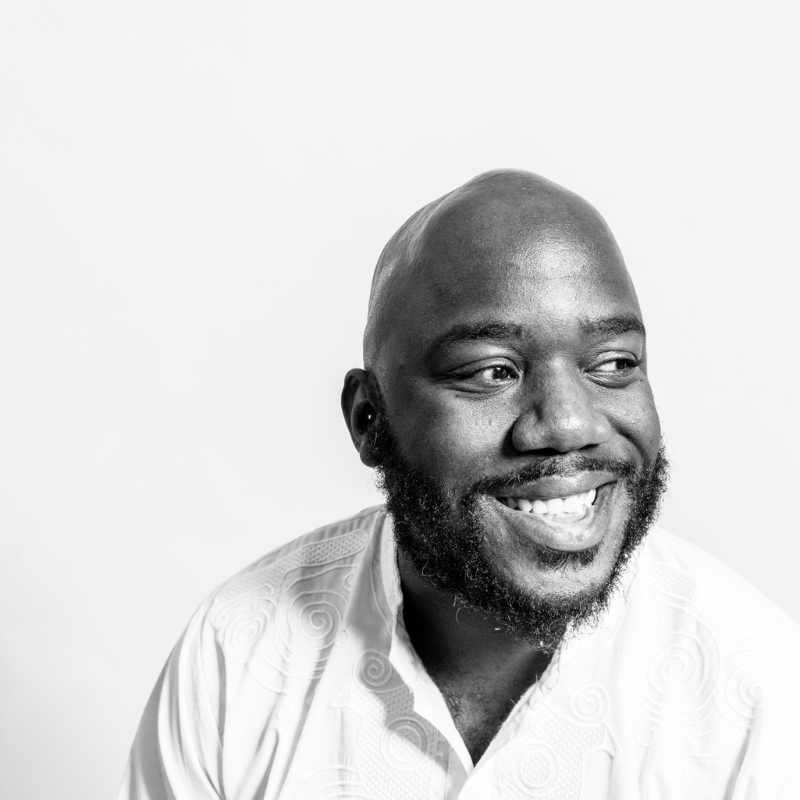
Josh Vincent
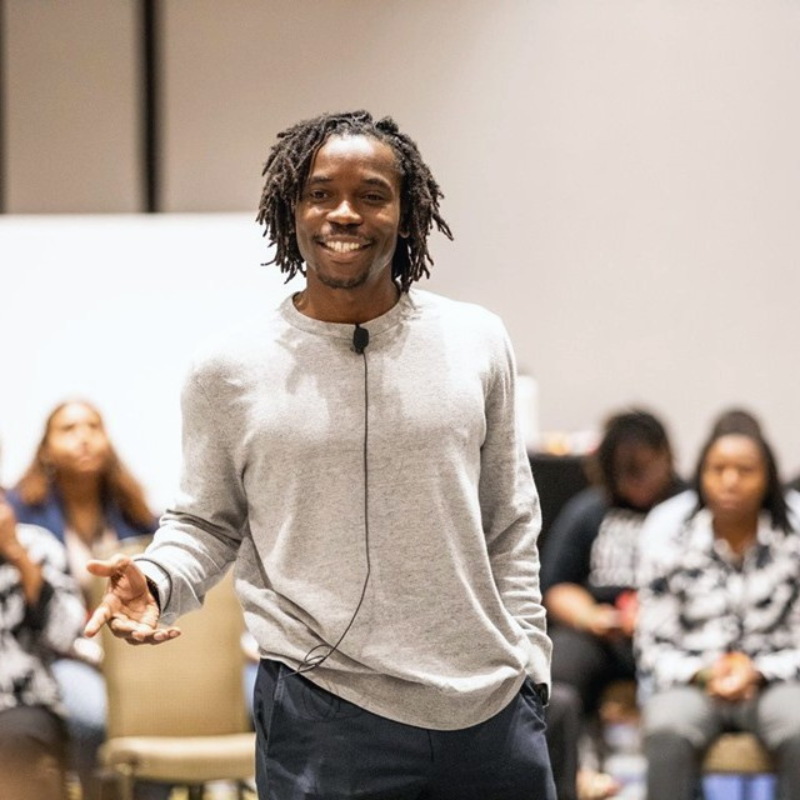
Wesley Morris
This interview was conducted at the Blueprint NC/Southern Vision Alliance Convergence in Asheville, NC on November 12, 2025. Southern Vision Alliance (SVA) leaders reflect on how we started this year prepared for this exact moment, the challenges we’ve faced, and how our vision and work will continue into next year.
⭐How has SVA navigated this challenging year?⭐
Joshua: I think this year has been incredibly good for us, given the landscape. Going into 2025 as an organization we anticipated this. One of the benefits of our clear and unafraid political orientation is that we were not naive about the impact and realities of fascism or authoritarianism. We held the Southern Summit in the summer of 2024 with a very clear call of gathering people around fighting against fascism and defending democracy. We came out of that with another series that we called network gatherings to prepare people for the aftermath of the presidential election. In response, we held the First 100 Days of the Trump Administration webinar series. Because of our preparation and political framework we were able to do that in a way that a lot of folks really weren’t because they were in shock.
A lot of folks were coming from a posture of uncertainty, whereas we were coming from a place of anticipation. We had a different political orientation. We knew this was going to happen. We were talking about this in 2018 as an organization and preparing for how to navigate this very moment.
So, we started the year in community, with people that shared our perspective and commitment to build power. We then launched the Power Building Department. We’ve found that the only way through this is with the people.
LeiLani: I agree that having the political orientation that we held has helped us to be more prepared for this moment. We have stayed grounded in our values, particularly located in the South and knowing that fascism is not new in the United States. European fascists of the early 1900s employed tools of the Klan to develop the fascist movement itself. The tactics we’re seeing are not new. While this moment is in some ways unprecedented, we at least have that understanding to hold on to an end to know that we can find our way through this and that it takes the community and hard organizing work that our groups have been doing.
As the year has gone on more and more folks have come around to refusing to water down our politics because that’s not a winning strategy at all.
Wesley: We’re meeting this moment knowing that there’s a global majority of people who are striving for these same principles – equality, fairness, equity, redistribution of wealth – all as a form of resistance. We are openly against the hoarding and concentration of wealth that weaponizes violence globally. We’re in a space where in 2024, at the Southern Summit, there were newspapers who came to the U.S. South from the global diaspora – from Eastern Europe, from the Caribbean, and other places – to see that somebody was doing something here that speaks to our collective reality.
⭐What have been the greatest challenges of 2025?⭐
Joshua: Some of the challenges have been the tactics of fascism and capitalism that create the most desperate conditions for people to respond to and then exploit difference and have us believe that the difference is why we can’t live in the world, when the reason we can’t live in the world is because of fascism, authoritarianism and capitalism.
Wesley: While we faced the force in the First 100 Days of the Trump Administration, responding to the chaos of Executive Order after Executive Order, we were organizing a categorical response of each sector that our movement encompasses – from education, to LGBTQ+ rights, to racial justice and reparations. The space held it all and hundreds of people kept tuning in on a Wednesday night when they could’ve been doing anything else.
Our response is to stand in our own humanity, see the humanity in everyone else, and work together to build communities.
Organizations navigating this time period have it equally as challenging as people trying to navigate it because organizations break down. This impacts our legacy and futures. It’s not a given that organizations persist and survive. For us, in this period, what’s important is that we bend, we transform, we learn how to evolve, we learn how to take wounds and tragedies and say that’s not the end of the story.
At Southern Vision Alliance, I think we’re really doing our best to strive towards those ways of showing that we are here and we are actually responding.
⭐Where do we go from here? ⭐
Joshua: I’ve been talking a lot recently about a necessary change of posture. In this 24-hour news cycle that is two-party aligned, they have convinced us that we are to live in a constant state of a two- and four-year cycle. Our lives are revolving around what is happening inside of our government in Washington. I think we need to adamantly reject that posture. We can no longer allow politics in the United States to serve as our soap opera that we are glued to on a constant basis, that we respond to emotionally when they have no emotional responsibility or connection to us at all. I’d like to see people begin to build a world that inverts the relationship to elected officials from us responding to them to them responding to us.
Some of the things I’m looking forward to are being able to work with people who we are in partnership with – to throw block parties and politicize those spaces. I’m looking forward to doing more of that on an even larger scale. We were able to partner with Black August in the Park to bring together 20,000 Black people in Durham on a Sunday afternoon, which was huge. How do we do more of that?
The outcome of the political decisions that are being made is not to be in politics, it’s actually to just live life. And I think people are realizing and awakening to that truth. We want to live our lives, and not just elect people. That is the point of policy and politics, not to have some celebrity in office.
Relatively every year there’s some kind of project we get to see physically manifest. The outdoor space at the People’s Solidarity Hub is that this year and going into next year. Before that it was PSH II, before that it was PSH I, the office space. In addition to the strategic and theoretic understanding, we’re operating a physical, tangible space for our people to gather. That provides groundedness and allows us to know where our feet are and who we’re with. The fact that we can do these things in spite of all that’s happening around us means that we can do anything together.
Capitalism cannot operate without trying to sell you something you already have. When we look at the things that are depleting our funds as a community, they are selling us back the stuff that we already had — community, childcare, farms, health – all that we already had. They created the conditions to extract them and then tried to sell them right back to us.
We understand and hold these critiques and that’s how we want to operate. We can acquire spaces and still govern with a politic that is anticapitalist while we also think about how we make more spaces for more people to be able to access.
LeiLani: More collaboration. I think the current political moment’s strategy is isolationist. It’s an attempt to divide. For example, the specific anti-trans attacks that are happening right now – that’s a specific policy to separate trans people even from LGBQ people. That’s the tactic – to separate them out so they’re specifically targeted, specifically isolated. And all of these attacks on individual sectors is an attempt to weaken us as a movement. It’s clear why we need these collaborative spaces.
The importance of fiscal sponsorship is clear in the way that it takes on the administrative tasks that all the groups that are doing this good work need to get done. Fiscal sponsorship takes that burden off of them so they can actually do the important work that they do. It’s also why fiscal sponsorship is under attack right now. I think of our work in that light – when we created our program ten years ago, we were really intentional about not just providing services but creating space for folks to come together so that folks doing queer rights work can talk to folks doing immigrants’ rights work who can talk to those doing workers’ rights work and be clear that it’s all the same work and that sharing that work is what’s going to push it forward.
We’re going to move the way we’ve been going.
Wesley: I’m not going anywhere. We would be doing this work, we would be gathering folks, we would be doing political education, even if there was no autocratic leadership. If I’m doing anything, I’m doing my best to welcome people back home. So, I’m not going anywhere in that sense. I think this is it. The pillars of movement building that we honored – A. Philip Randolph Institute, Joyce Johnson – we are in the work of their eras, which I think laid the place for us to be. If I’m doing anything, I’m inviting folks to this place to grow what this is.
Mrs. Joyce Johnson receiving an award at Asheville Convergence on November 11, 2025.
(Photo taken by Manzoor Chema)
Dr. Vincent Harding made a statement: “You ought to live like a citizen of a country that doesn’t yet exist, but urgently needs to.” I just kept thinking about that. Our movement is to not be removed. We don’t have to think that we have to go so far away or construct something that isn’t already here. It may just need to come out. We may need to welcome people home.
I hope that people can feel that from our work in 2026 and beyond – a deep familiarity within themselves and feelings of mutual respect.
That’s my hope. I think greatness is sometimes measured in our ability, not to be resilient, but to be defiant. I pose these two questions of endurance versus activity and I’ve been thinking about that a lot. Resilience requires quite a bit of knowing that you’re accepting. Defiance is a blowback. It’s saying I’m not accepting this.
We will outlast that which is evil.