Across North Carolina and throughout the South, a new wave of development is reshaping communities: the rapid expansion of data centers built to power artificial intelligence and other digital technologies. Billions of dollars are flowing into these projects, but so are questions about who benefits—and who bears the costs. For the people living in these communities, these are not abstract questions about the future of technology. They are questions about land, water, energy, jobs, environmental health, and who gets a meaningful voice in decisions that can shape a community for generations. Across the state, residents and organizers are coming together to demand transparency, accountability, and a say in what development looks like in their communities.
This is the larger struggle that makes power building so important. As our Power Building Cohort gathered in Wilmington, North Carolina to strengthen our skills and relationships, we saw how local fights—from data-center development to workers’ rights—can become opportunities to build lasting collective power across the South.
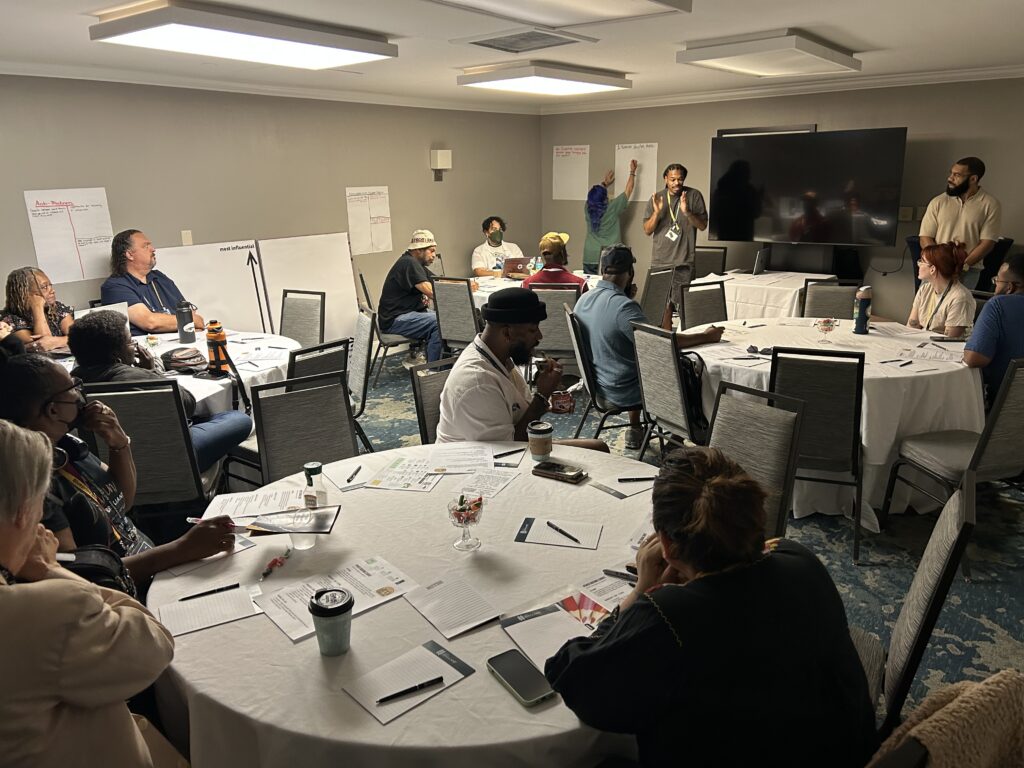
Power Building Cohort Members strategized campaigns to stop data centers, protect farmworkers from increased heat, and other campaigns during Blueprint NC convening in Wilmington on September 9 – 10, 2026.
Photo Credit: Manzoor Cheema
Wilmington carries deep movement history. From the Wilmington Coup of 1898 to generations of organizing for racial, economic, and environmental justice, this community reminds us that Southern movement building has always required people coming together to challenge systems and build something better.
Our cohort is carrying that tradition forward.
One of the clearest examples is the growing fight over data centers across North Carolina. Communities are asking important questions about who benefits from these massive investments and who carries the costs. Organizers are raising concerns about energy demand, water, land use, noise, infrastructure, and whether local residents have a meaningful voice in decisions that will shape their communities for decades.
That fight is playing out right now in Richmond County. On September 15, the City of Rockingham approved a rezoning request for a proposed Terra Nexus data center on Old Cheraw Highway. The project represents a reported $1.2 billion investment and could include several buildings, while creating an estimated 30 permanent jobs. Local residents have expressed both support and opposition, making the debate a real example of the questions communities are wrestling with as data-center development expands across the state.
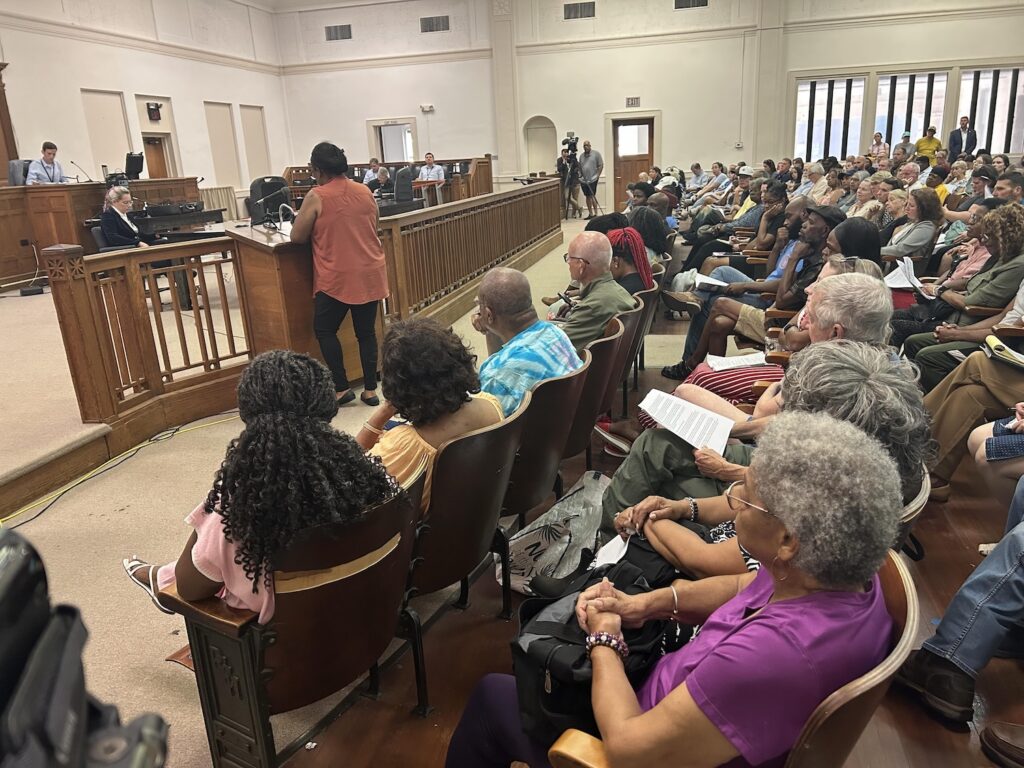
A capacity crowd turns out for the DEQ hearing on a proposed Richmond County data center, with residents raising health, environmental, and quality-of-life concerns (July 30, 2026)
Photo Credit: Manzoor Cheema
At the same time, organizers in Rockingham County are responding to data-center growth in their own communities. WhiteFiber is transforming a former Unifi manufacturing site in Madison into an AI data center. The project began with 24 megawatts of planned capacity and has been described as scalable to as much as 200 megawatts. The town of Mayodan has also enacted a moratorium on new data-center development as local leaders consider how these projects should be regulated.
These fights show why power building matters.
We need organizers who can help communities understand what is happening, bring people together, engage decision-makers, and build the collective power needed to shape the future of their communities.
We also heard from groups organizing for workers’ rights and economic justice. Across the South, people are building campaigns that put working people at the center and create stronger pathways for workers to have a voice in their workplaces and communities.
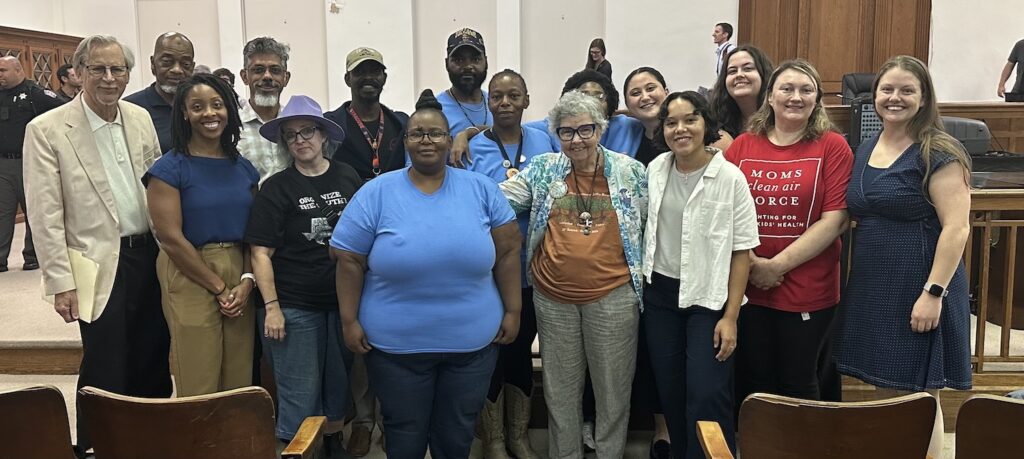
Building power. Organizing statewide. Power Building cohort members and social justice partners are rallying a grassroots movement against data centers in NC
Photo Credit: E. Everett
That is the purpose of the Power Building Cohort. We strengthen skills. We build relationships across movements. We develop new leaders. We share lessons from local fights and turn them into collective power.
Wilmington was more than a training. It was another step in building a stronger Southern movement rooted in community, organized people, and a shared vision for our future.
The work continues.