“I envision the People’s Solidarity Hub as a space where progressive movement work is able to be planted, fermented, and grown over the course of time because it remains accessible and affordable for the longevity of the work that makes the lives of people better,” said Jae Slaughter, Coordinator of the People’s Solidarity Hub (PSH).
PSH is a part of the Southern Vision Alliance (SVA) and offers the physical infrastructure of two buildings, a lending library of equipment and supplies, printing, weekly community office hours, and a soon-to-come outdoor pavilion with gardens, to hundreds of groups in the Triangle and beyond.
“It’s a home base space where people can come and try to build something and experiment with the shapes that projects can take,” added Kel Sheridan, PSH Associate. “ Having a physical space to gather and collaborate for organizations that aren’t yet established to start doing that work in terms of the larger movement work is really important,” they said.
This powerhouse team of two operates PSH as a movement hub in Durham that has hosted over 1,500 events since it opened its doors in 2022. The need for a safe and accessible physical space has grown over the years and the team has risen to the challenge, hosting more than six hundred events just last year, opening a second building, working on an outdoor pavilion, and collaborating with the City of Durham and community volunteers to create a garden and mural project in the space.
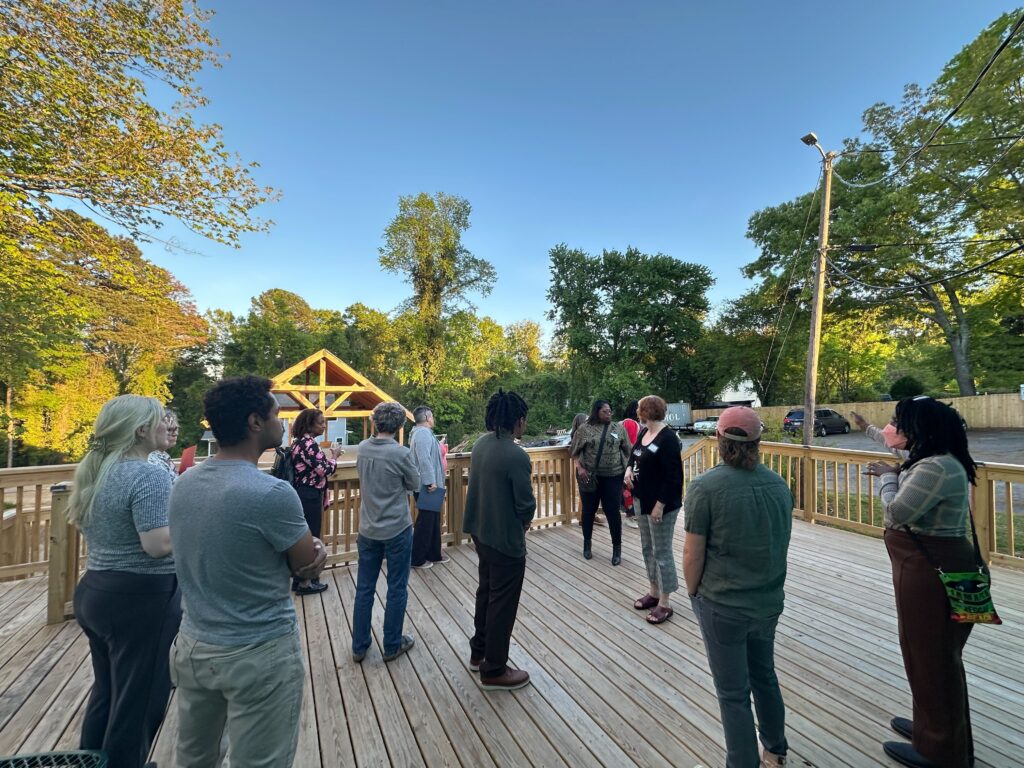
Jae and Kel hosting a group tour of the space at SVA’s first Southern Visionaries Circle in April 2026.
Part of our work at SVA is building the infrastructure that allows movements to take root and grow. That infrastructure isn’t always visible. Sometimes it looks like fiscal sponsorship, back-end administrative support, or helping a grassroots organization navigate the systems it needs to do its work. And sometimes, it looks like something much more tangible: a building with a kitchen, a lending library, meeting rooms, wooden floors, a working printer, coffee and tea, and someone there to help set it all up and respond when something inevitably breaks or goes wrong.
That’s the work of the People’s Solidarity Hub.
PSH is a community space designed to be accessible, affordable, and adaptable to the needs of organizers, activists, artists, neighborhood residents, and community groups. It is a place where people can meet, work, train, celebrate, collaborate, experiment, and build relationships — often behind the scenes.
And making that possible is a team of people whose work is equal parts hospitality, logistics, maintenance, relationship-building, and problem-solving.
Jae and Kel’s days at PSH can look very different from one another. On office-hour days, they open the space, set up tables and chairs, put out coffee, tea, and snacks, and make themselves available to whoever walks through the door.
And the needs of the people who walk through those doors can vary enormously.
Someone might come in to co-work. Another person might need an orientation to the space or help accessing the lending library. A neighborhood resident might stop by looking for food, water, or another basic resource. Organizers might need a place to meet. Artists might be working on a collaborative project. A group might be preparing for a training or community gathering.
“A lot of the work is adapting to the people and the needs of the people who come into the space,” Kel says.
For Kel, caring for a physical space and caring for the people who use it are deeply connected. Their role is, in many ways, about removing barriers: making sure the building works, that people have what they need, and that they can move through the space as easily as possible while they focus on the work they came to do.
That might mean responding to an urgent maintenance issue. It might mean helping someone figure out how to use the lending library. It might mean setting up tables and chairs before an event, answering questions about a booking, or simply making sure there is coffee, tea, water, and a welcoming person at the front of the building.
It is infrastructure — but it is also care.
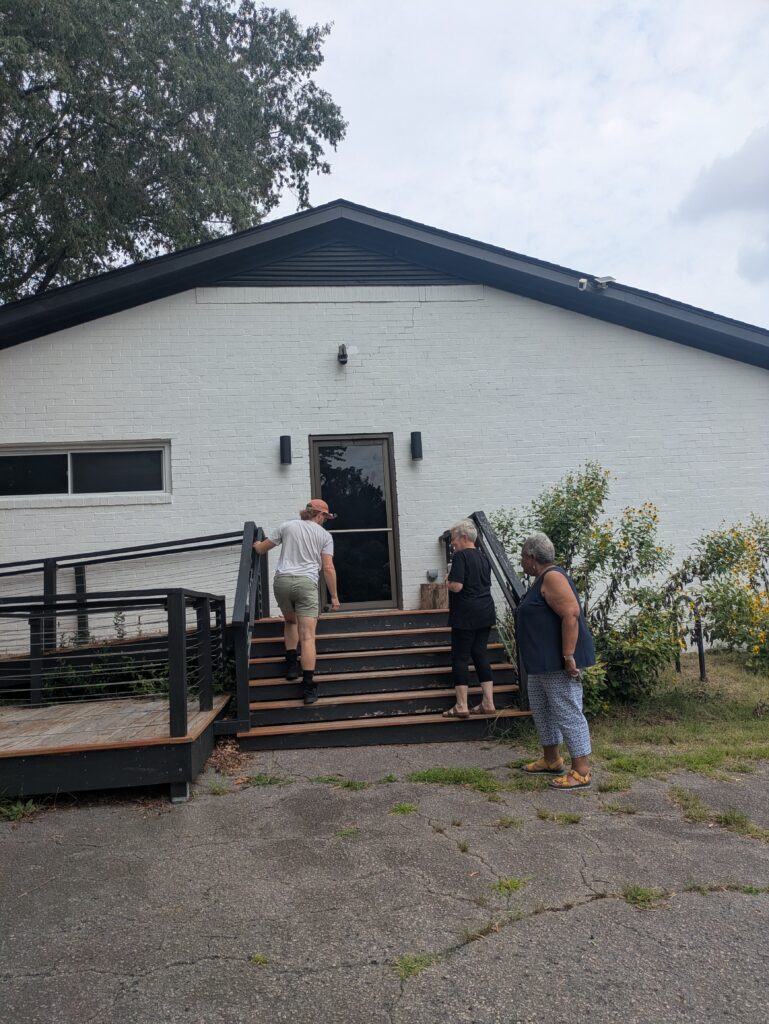
Kel taking PSH users who popped in during office hours on a tour of the facilities.
There are also the less visible parts of the job: cleaning, inventory, equipment maintenance, answering emails, managing communications, preparing the newsletter, and making sure all the systems people rely on are functioning.
Kel compares it to taking care of a house — except this is a house used by many different people, multiple times a day, most of whom don’t know how everything works.
And when something breaks, someone has to figure it out.
That’s where the larger PSH team comes in. Kel and Jae share the communications and logistical work of keeping the space moving, while Jeff See, Operations Coordinator, responsible for all things physical, handles much of the physical plant maintenance and the inner workings of the buildings — plumbing, electricity, HVAC, and all the other things that keep a community space functioning.
Much of this work happens quietly. If everything is going well, people may never notice it.
That’s the point.
More than half of PSH’s bookings are not publicly advertised.
That’s significant.
It means that PSH isn’t only an event venue or a public-facing community center. It is also a place where people can gather quietly, work through ideas, build relationships, and experiment.
For organizations that are just getting started — or for groups that don’t have the resources to maintain their own physical space — that can be transformative.
A physical space gives people somewhere to try something.
Somewhere to test out an idea before they know exactly what it will become.
Somewhere to bring together people who may eventually form a coalition.
Somewhere to connect with movements that are already underway and figure out how to contribute.
In that sense, PSH is not simply infrastructure for movements. It is part of the process through which movements are built.
It creates opportunities for groups that might otherwise remain siloed from one another to encounter each other. And it creates the possibility of cross-pollination — of ideas, relationships, skills, and resources moving between communities.
That is one of the ways PSH complements SVA’s broader movement-building work: by creating a physical hub where intersections can happen.
For Kel, the best part of the job is seeing what people bring into PSH.
“I love seeing what people bring into the space,” they say. “It’s so inspiring to see the offerings people are creating and putting out into the community.”
That inspiration comes from being close to grassroots work — from seeing the people who are organizing, creating, gathering, and building something new.
It also comes from being able to offer something in return.
A space.
A resource.
A listening ear.
A working printer.
A cup of tea.
A person who answers the phone when something goes wrong.
A place where a group that doesn’t yet have its own home can begin to imagine what having one might make possible.
For Kel, that is what building movement infrastructure means.
It means creating a physical space where people can gather with relative security and privacy. It means making room for organizations to experiment and grow. It means helping people connect with work that is already happening. And it means making the practical pieces of gathering easier so that organizers can spend their energy on the hard work of changing their communities.
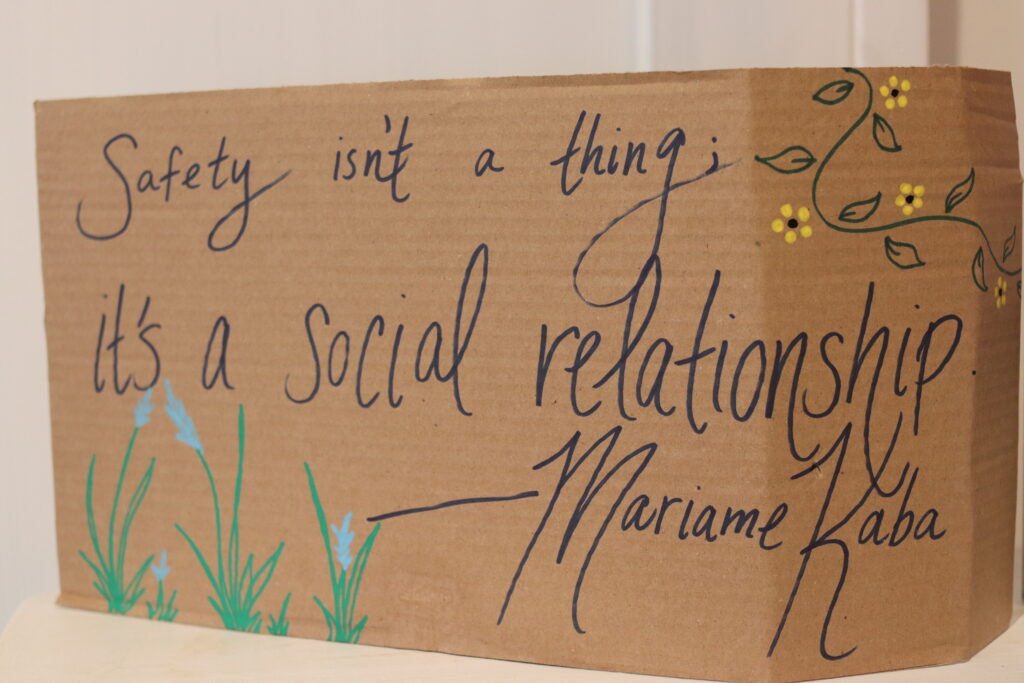
Community art from Durham Beyond Policing, one of SVA’s sponsored projects.
The work of maintaining a building may not always look like movement building.
But walk through PSH on a busy day and the connection becomes clear.
People are meeting. People are planning. People are making art. People are sharing resources. People are dancing. People are finding one another.
And behind all of it is a team making sure the space is ready to catch them.
Because movements need people — and people need places to come together.
The work of PSH is to make sure it is there when they do.
Stay tuned for a few more exclusive behind the scenes profiles of a day-in-the life of a fiscal intermediary.