As the new school year starts, the staff of one Durham, NC preschool, Latino Educational Achievement Partnership (LEAP), are returning with a new approach to language within their workplace and with the families they serve. LEAP came to this new approach after participating in Wave, a Language Liberation Hub Language Justice Leadership Program. Wave is formerly known as the tilde Education Fund, sponsored by Southern Vision Alliance. Wave’s leadership program focuses on equipping organizations and individual language workers with the skills and capacity to support equitable multilingual communities through workshops, technical assistance, and language workers apprenticeships.
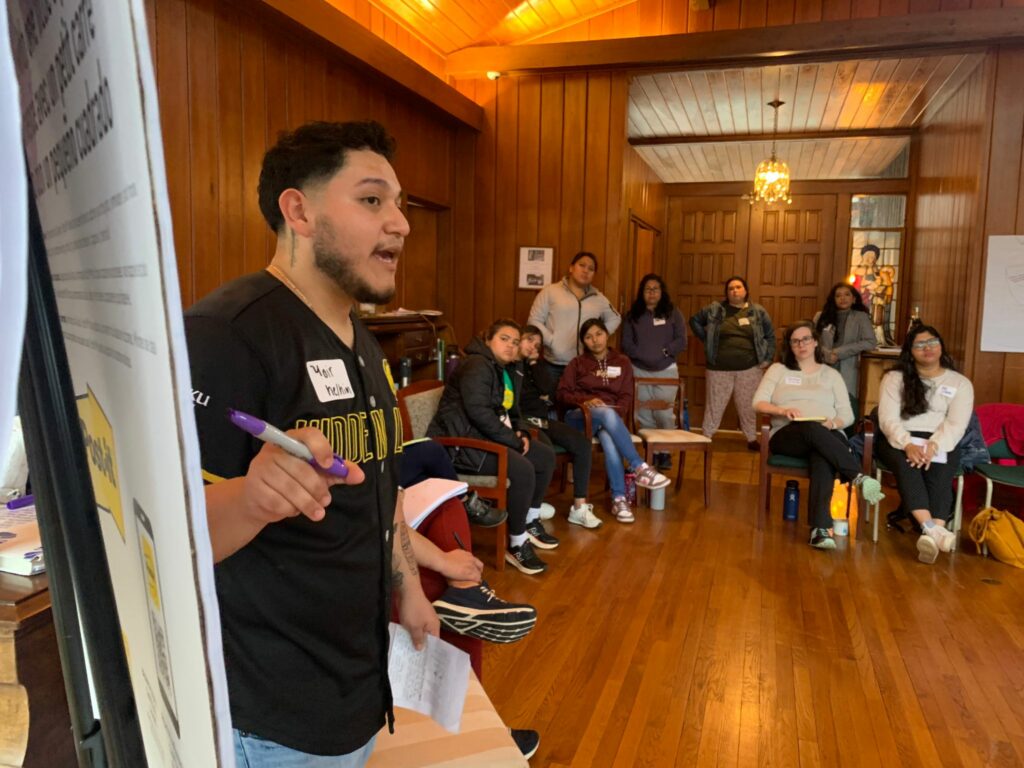
Pic 1. Yair Castellanos, Co-director of Wave’s Southern Regional Program facilitating an exercise on power and language at the Interpretation for Social Justice workshop co-hosted with LEAP, March 2024 LEAP makes education accessible for the Durham Latine community and ensures that students from the community can achieve educational success.
As a dual language, bilingual organization, LEAP eliminates barriers facing the families they serve. While language isn’t the only factor in eliminating barriers for Durham’s Latine families, it is a significant one. They offer bilingual staff and provide culturally-congruent support for children in preschool, elementary and middle school. So why would a bilingual organization like LEAP invest in an intentional learning process around language justice? Despite the bilingual support LEAP has always provided, Executive Director Megan McCurley wanted to take an even more intentional approach to language. She came to LEAP after a career in public schools, where she saw the overburdening of bilingual staff tasked with parent communication, and the frustration of Spanish-first families who weren’t afforded direct relationships with their children’s teachers. At LEAP, she wanted to make it clear that parent communication was the responsibility of all staff, regardless of language. She was also wary of LEAP becoming an English-dominant space as more second-generation families enrolled, leaving behind the families that need language support to navigate educational systems.
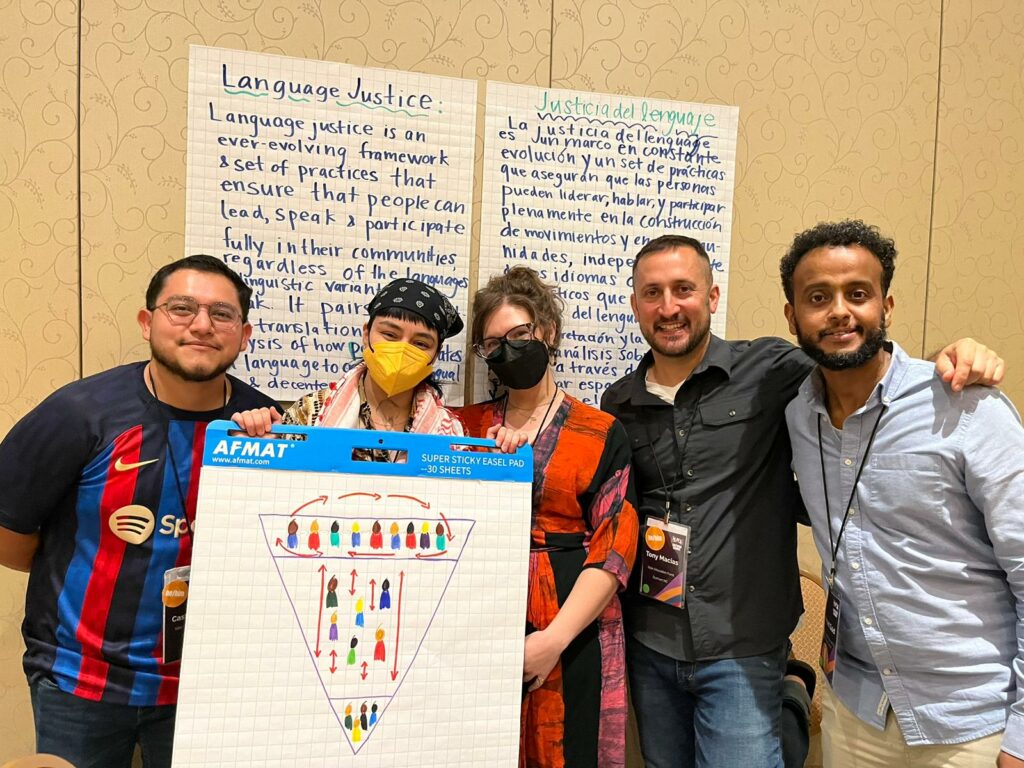
Pic 2. Wave co-directors Yair Castellanos, Gloria Delgadillo, Allison Corbett, and Tony Macias, along with advisory board member Ahmed Ahmed at SVA’s Southern Summit, June 2024
When she noticed a few teachers struggling to understand their English-speaking teacher trainer, she decided to offer simultaneous interpretation at a staff meeting. The staff were initially skeptical; however, the difference was notable. The result was a “lovely, fun, and hilarious” conversation, in which teachers were the most engaged she had seen them. Initial skeptics were pleasantly surprised. This convinced Megan that it was worth partnering with Wave to invest further in language justice– an ever-evolving framework and set of practices that ensure that people can lead, communicate, and participate fully in movement-building and in their communities, regardless of the languages or linguistic variants they use. After working with Wave, LEAP has developed a deliberate approach to parent communication and they are able to consider language in all of their interactions. For any meeting, they check in to decide how they will ensure everyone can speak in the language in which they are most confident, whether that’s through interpretation, or in some bilingual spaces, giving people permission to speak according to their preference without matching their conversation partner’s language.
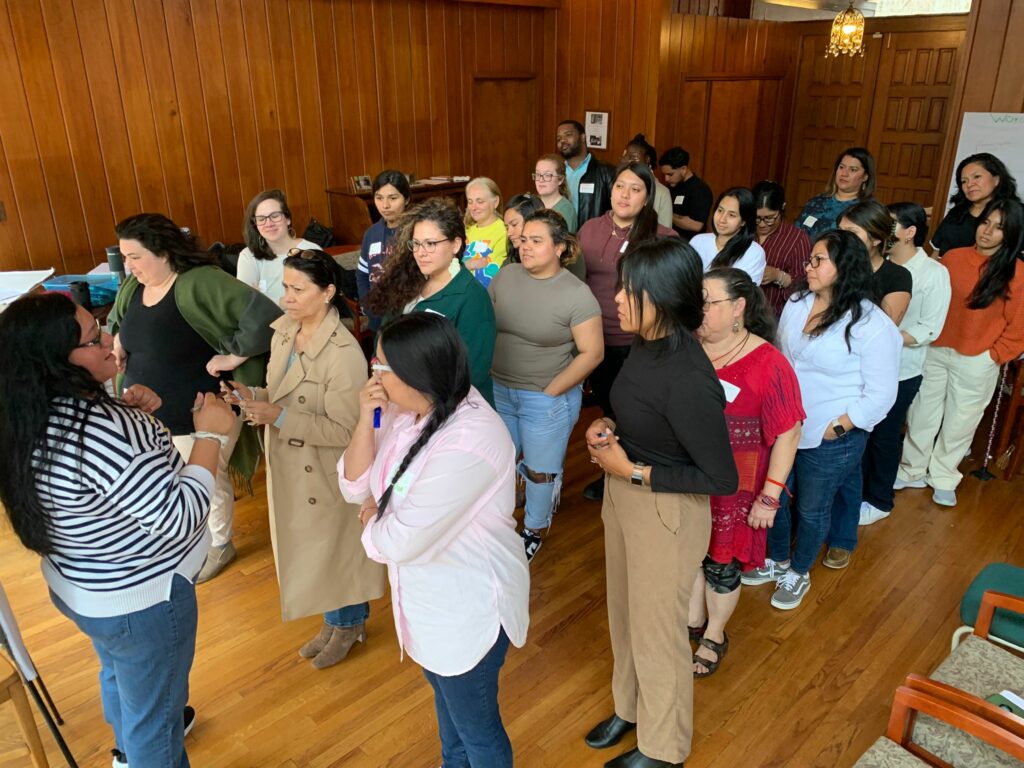
Pic 3. Fernanda Torres, interpretation apprentice and LEAP staff member, in her role as facilitator-in-training at the Interpretation for Social Justice workshop at LEAP, March 2024.
Embracing a language justice lens helped LEAP tap into the strengths of their school’s community. Megan says, “in not using English as a measuring stick,” and “allowing everybody to show up in the language that they are strongest in…we all are able to value each other and all the things that we have as a school more.” Wave is a home for language justice workers and trainers who share a vision for growing our community of practice and the capacity of our movements and communities to create linguistic democracy.