When crisis hits, grassroots organizations are often the first to respond. They are already rooted in their communities, already building relationships, and already listening to what people need. What they often lack is the flexible funding to act quickly.
That’s where rapid response funds come in.
Southern Vision Alliance’s Southeastern Rapid Response Block & Build Fund was launched in April 2025 to provide critical support in crisis moments to frontline grassroots organizations across the Southeast on a monthly basis in the form of timely and flexible grants of $500 to $3,000 with the goal of blocking threats and building long-term power.
So far this year, we have disbursed 27 grants to groups in Texas, Florida, Alabama, Georgia, Arkansas, South Carolina, North Carolina, Tennessee and Louisiana and totaling $75,250.
Through the fund, grassroots organizations across the South have been able to turn urgent needs into immediate action—and immediate action into longer-term community power.
Here are just a few of the ways directly impacted communities are using these funds to build power and change oppressive systems across the South.
Peace Garden Project used rapid response funding to provide free legal consultations to immigrants in Eastern North Carolina and train healthcare providers to better protect immigrant patients. ReNforce used its funding to organize thousands of Augusta residents around public investment, incarceration, and community safety. Aflorar Herb Collective turned funding into herbal care kits and healing infrastructure for communities facing climate disaster, immigration raids, and political violence. And Durham Art Asylum used its grant to create community-controlled mental health tools that help people define their own care before a crisis occurs. Avanza Arkansas brought bilingual Know Your Rights education and family preparedness resources to immigrant communities facing heightened fear and uncertainty.
The work looks different in every community, but the principle is the same: get resources to people closest to the problem, trust them to identify the response, and give them the flexibility to act.
Rapid response funding isn’t only about responding to emergencies. It is about building the relationships, knowledge, leadership, and infrastructure that allow communities to care for one another, organize together, and build power—even in the most uncertain moments.
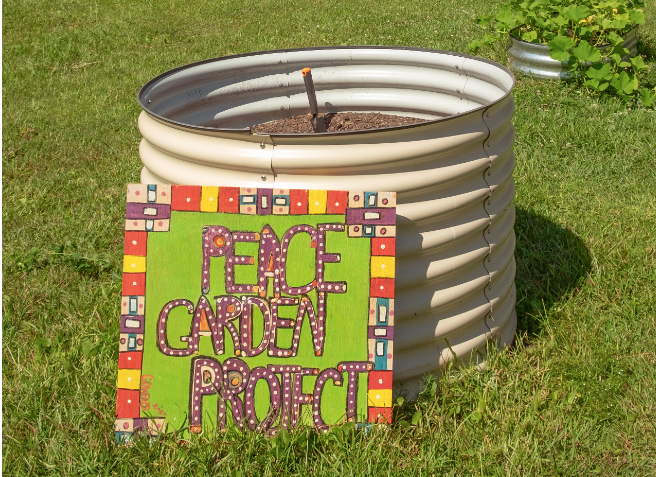
Photo Credit: Peace Garden Project
Peace Garden Project used the funds to support immigrant and Latinx communities across Eastern North Carolina, where changing immigration policies have created increased fear, uncertainty, and an urgent need for trusted legal information.
They worked with Latinx partners to provide free legal consultations for immigrants in Dare County, helping community members understand their rights and access legal guidance.
The organization also brought this information into healthcare settings, conducting two trainings for providers from Outer Banks Hospital and the Community Care Clinic on changing immigration laws and ways to help keep immigrant patients safe. The trainings reached 47 people in person, with additional sessions planned in Dare County and Fayetteville, North Carolina.
This work is about more than responding to an immediate crisis. The legal clinics and trainings create opportunities for community members and allies to share information, build relationships, and strengthen the networks that help immigrant communities stay safe.
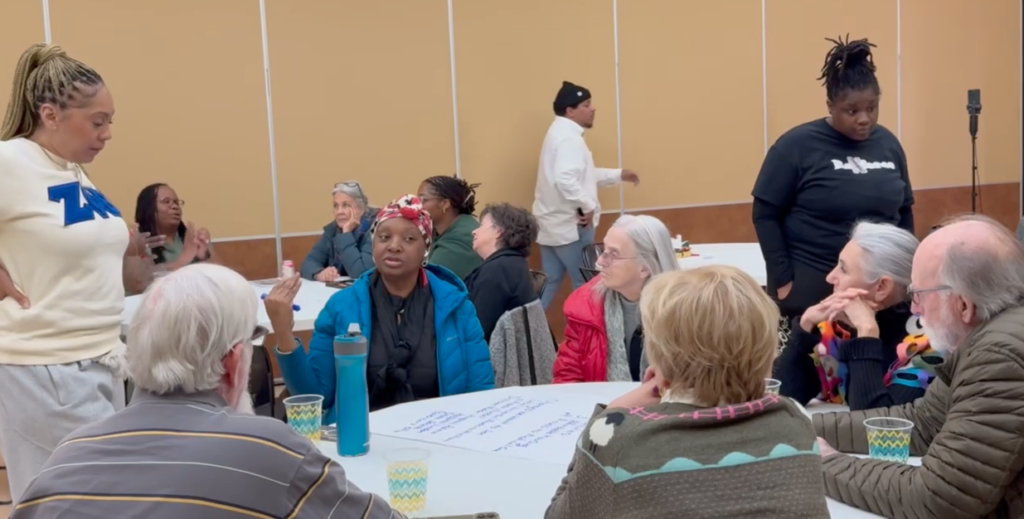
Participants engaging in a community forum held by ReNforce to organize residents against the expansion of the Charles B. Webster Detention Center.
Credit: ReNForce
ReNforce used the funds to support its Block the Build (By Building the Block) Augusta campaign, an effort to organize residents around how Augusta-Richmond County invests public dollars and approaches public safety.
At the center of the campaign was SPLOST 9—a proposed continuation of Augusta-Richmond County’s 1% local sales tax used to fund major public projects. The $375 million SPLOST package included more than $81 million for renovation and expansion of the Charles B. Webster Detention Center, including approximately 300 additional jail beds.
ReNforce argued that public investment should address the root causes of incarceration—including housing instability, mental health needs, unemployment, and barriers to reentry—instead of expanding the jail.
Rapid response funds helped ReNforce get that message into the community at a critical moment. The organization hosted six community and family meetings, four church tours, distributed educational materials, and launched a digital outreach campaign, ultimately reaching more than 2,500 community members.
Although SPLOST 9 ultimately passed in May, the organizing created something that will last beyond the vote. ReNforce strengthened relationships with residents, faith leaders, and community partners and was invited to tour the detention center with the mayor, sheriff, and detention staff to offer community-informed recommendations.
ReNforce continues to organize residents around transparency, accountability, and investments in housing, mental health services, workforce development, and reentry.
Rapid response funding made it possible for ReNforce to meet a critical decision point with community education, organizing, and power-building—ensuring that the people most affected had a voice in decisions about the future of their community.
Aflorar Herb Collective received funds to support the creation of herbal care kits and the labor needed to coordinate volunteers, gather resources, and distribute mutual aid across the South.
Aflorar is a grassroots collective rooted in healing justice, traditional herbal practices, and mutual aid. Led by and for queer and gender-expansive Black, Indigenous, and People of Color—particularly Latinx and mixed-heritage communities in the South—Aflorar understands healing as essential movement infrastructure.
In the wake of Hurricane Helene, ICE raids, and increasing political violence, demand for Aflorar’s care kits has grown. With rapid response support, Aflorar distributed 322 herbal care kits and reached more than 4,000 people through care-kit distribution, pop-ups, outreach, and community events.You can read more about their work in their seasonal newsletters on their linktree.
The kits included herbal teas, salves, and other healing supplies, along with bilingual plant cards, zines, and other resources that help people understand and use traditional plant medicines. When ICE raids began across North Carolina, Aflorar was able to quickly send 100 care kits to organizers in Charlotte, providing a tangible reminder that their communities were holding them through a frightening and exhausting moment.
Aflorar also created El Descansito, a community healing space where rapid response organizers could rest and access herbal medicine, somatic practices, therapy, acupuncture, and other forms of care.
This is what rapid response can make possible: the ability to respond not only to crisis, but to the human beings living through it.
For Aflorar, care is not separate from organizing. It is part of how communities sustain themselves, build relationships, and remain connected to the work of collective liberation.
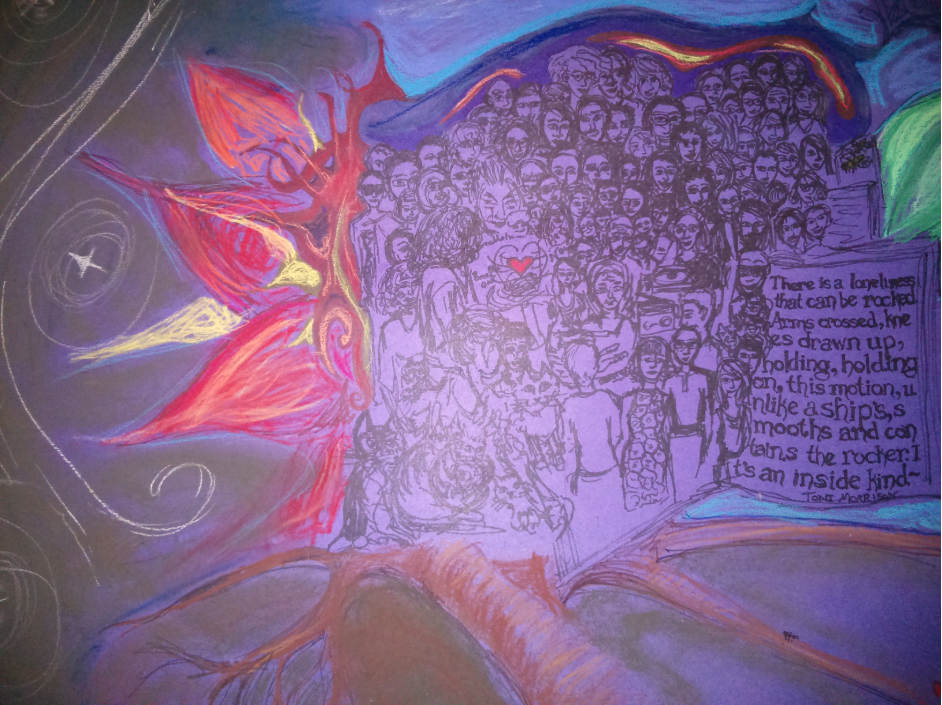
Drawing by Beth Bruch, “There is a loneliness that can be rocked. Arms crossed, knees drawn up, holding, holding on, this motion, unlike a ship’s, smooths and contains the rocker. It’s an inside kind.”
Credit: Durham Art Asylum website, drawing by Beth Bruch.
What if, before a mental health crisis happens, people could define for themselves what care, safety, and support should look like?
That’s the question at the heart of Durham Art Asylum, a grassroots collective of neurodivergent artists and community members building alternatives to coercive and carceral approaches to mental health care.
Durham Art Asylum received funds to develop and distribute Creative Psychiatric Advance Directives (CPADs)—tools that allow people to document their care preferences, boundaries, values, and wishes before, during, and after a crisis occurs. The CPAD is a more liberatory and person-centered redesigning of the legal psychiatric advanced directive. The formal document is included so that people can actually file it with the state.
The project responds to an urgent need in Durham, particularly for BIPOC, queer, trans, and neurodivergent people who are disproportionately impacted by psychiatric and carceral systems. Rather than leaving decisions about their care to institutions, CPADs give people a way to define their own needs and advocate for themselves.
With support from SVA, the Art Asylum redesigned the CPAD to make it more accessible and began producing and distributing hundreds of copies through community spaces, including The LGBTQ Center, The Borough, and Queen Street Magic Boat. They also organized workshops where community members could work together to complete their directives and share knowledge about navigating mental health systems.
At the same time, the collective began updating its Durham Mental Health Resource Guide to make locally grounded, non-punitive resources easier to find and access.
Perhaps most importantly, the project brought the Durham Art Asylum community back together to organize. The workshops and creative process are not simply about producing documents—they are spaces for political education, relationship-building, and collective care.
For Durham Art Asylum, building power means putting knowledge and decision-making back into the hands of the people most affected.
Avanza Arkansas supported immigrant and mixed-status families across Arkansas. With the funding, Avanza hosted three bilingual Know Your Rights and family preparedness events, reaching approximately 250 people. Families received legal information and community resources, completed 30 Powers of Attorney to prepare for emergencies, and accessed 20 pro bono legal consultations through trusted community partners.
But getting people in the room was not always easy. Many community members were understandably afraid to attend public events because of concerns about immigration enforcement. Avanza responded by working with trusted local organizations to identify safe spaces where people could gather, ask questions, and access support without fear.
These gatherings did more than provide information. They brought people together to build relationships, prepare for emergencies, and strengthen their ability to respond collectively when their communities are threatened.
The fund will continue to receive applications and disburse funds through the end of the year. We appreciate your help getting the word out about this resource. Donate to Southern Vision Alliance to support this work.